ServicesPaint and Refinishing
Paint and Refinishing in Madera
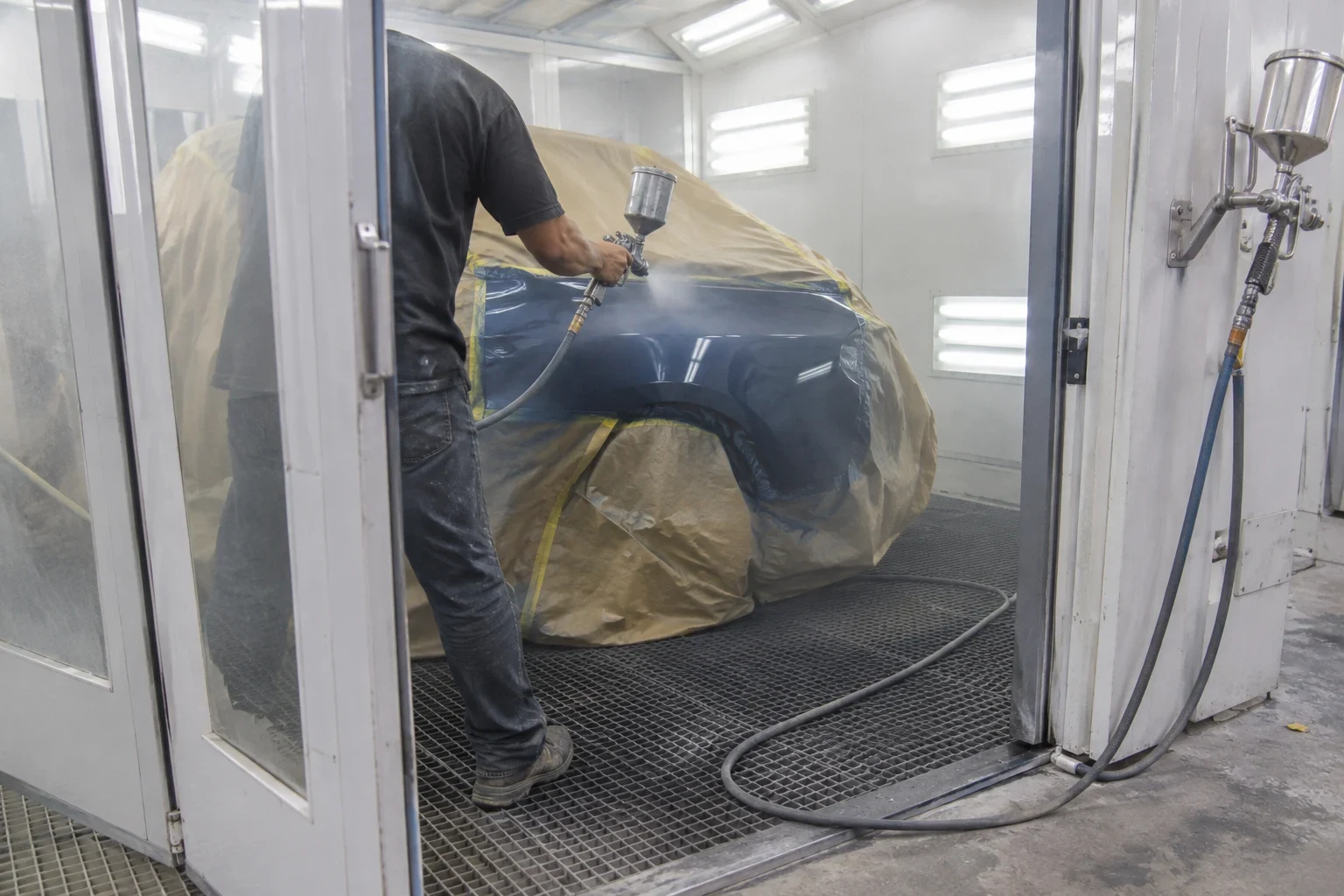
We match your car's factory color, prep the panel down to sound material and spray in a closed booth with filtered air. You get paint that blends in, lasts and stays the right thickness over the sensors in your bumper.
Paint is what keeps your car from rusting
Paint does more than make your car look right. The clear coat keeps sun and water off what is underneath. Once it fades, peels or gets scraped through, the base color breaks down and bare steel starts to rust.
We handle paint and refinishing for deep scratches, failing clear coat, panels replaced after a collision and full resprays. Every job starts from your car's factory paint code. Then we check our mix against the car itself, because paint shifts a little with age and sun.
Safety shapes how we work. Automotive clear coats and hardeners contain isocyanates, so all spraying happens in an enclosed booth, and our painters wear proper respirators. We also keep paint thickness in spec over radar and parking sensors, since extra layers can change how they read. Our shop is I-CAR Gold certified.
What a paint job with us includes
Color match from the paint code
We find the code on the tag inside the door jamb and mix to it. Before any paint reaches the car, we spray a sample panel and compare it with your car outside in natural light. If the shade is off, we tint the mix until it lines up.
Prep down to sound material
Paint only lasts as long as what is under it. We sand out the damage, cut out any rust, feather the edges and prime and seal the area.
Blending into nearby panels
A hard line between old and new paint is easy to spot. We fade the color into the next panel and clear the whole panel, so the eye does not catch a seam.
Booth spraying and baked cure
Your car is painted in a closed booth with filtered air. It keeps dust out of the finish and keeps fumes contained. Then the booth bakes the clear coat to cure it hard.
Sensor-aware refinishing
Many bumpers carry radar or parking sensors behind the paint. We measure film thickness in those areas and check that warning lights and sensors work before you drive away.
Polish and final inspection
We wet sand any dust specks, buff the panel and look it over under bright lights from several angles.
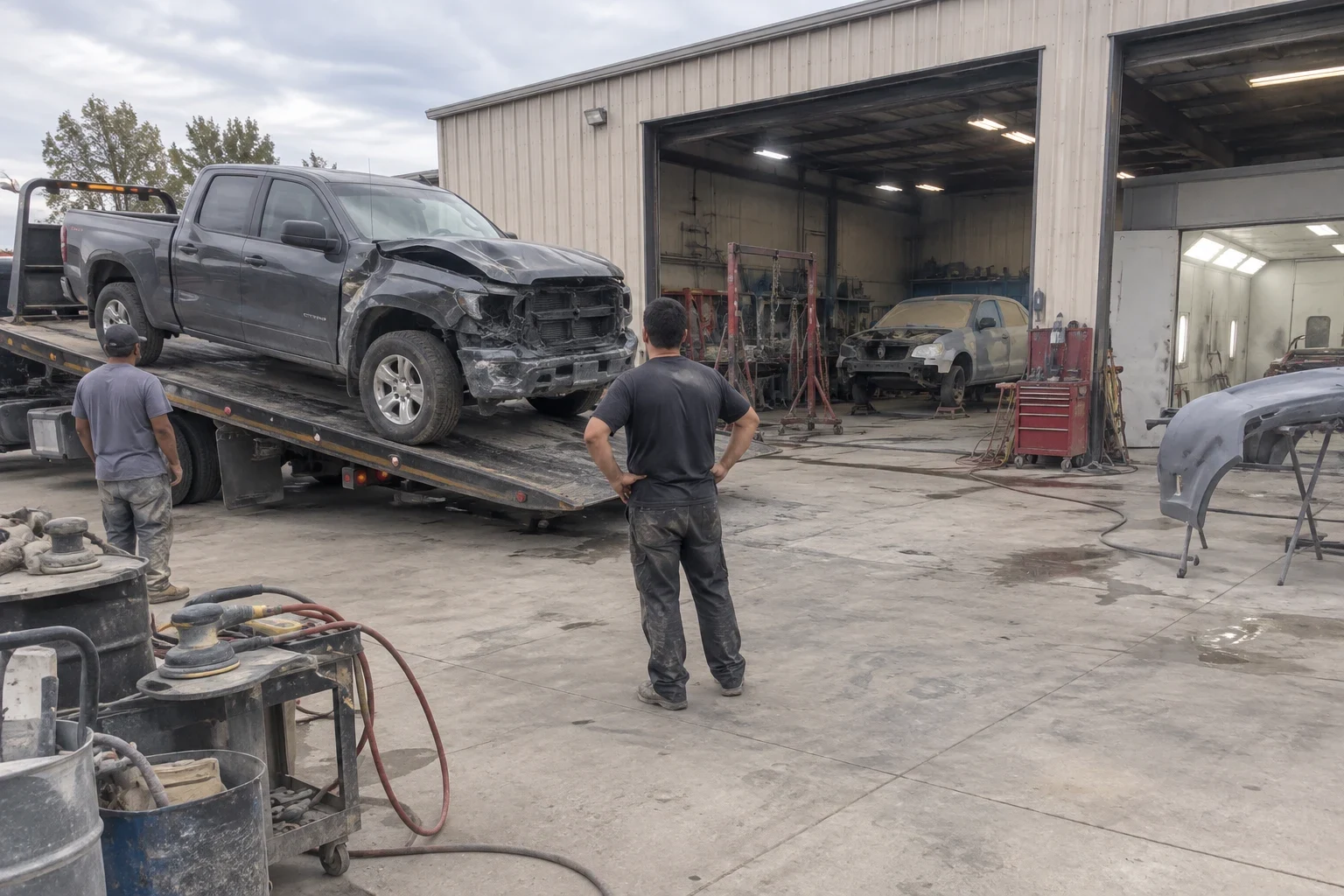
Signs your car needs paint work
- Clear coat peeling or chalky
- Long summers here bake roofs, hoods and trunk lids. When the top layer turns cloudy or flakes off in sheets, the color underneath has no protection left. Waxing will not bring it back.
- Scratches down to primer or metal
- If your fingernail catches in a scratch and you see gray or silver, it has gone through the paint. Bare steel will start to rust, so it is worth fixing soon.
- Bubbles along edges
- Small blisters near wheel arches, door bottoms or around chips usually mean rust is growing under the paint. Painting over them without cutting the rust out only hides it for a while.
- A panel that does not match
- A door or fender that looks a shade off from the rest often comes from an earlier repair done without blending. We can refinish it so it sits right with the panels around it.
- Warning lights after a bumper repaint
- If parking or blind spot alerts started acting up after someone painted your bumper, the paint may be too thick over the sensors. We can check it and refinish it correctly.
How the job runs
- 1
Phone call and inspection
Tell us what you are seeing and get your quote by phone. Then bring your car to our shop so we can look at the paint, measure it and write up the estimate line by line.
- 2
Teardown and prep
Where it makes sense, we unbolt trim, door handles, badges and lamps rather than masking around them. That way the paint wraps the edges cleanly and no tape line shows. Then the panel is sanded, primed and sealed.
- 3
Spray and cure in the booth
Base color and clear coat go on in the closed booth, in thin even coats. The booth bakes the finish so it cures hard before it leaves the room.
- 4
Reassemble and check
We put the parts back, polish the finish and check every sensor and light. When you pick up your car, we walk around it with you and show you the work.
What sets the cost of a repaint
Every repaint is priced on its own. The big factors are how much of your car needs paint, what turns up once we sand into it and how tricky your color is to match. Before any work starts, we go through the estimate with you line by line, so the bill at pickup matches what you agreed to.
- Area to be painted
- One scratched door is a smaller job than a hood, roof and trunk lid with peeling clear coat. Blending color into the panels next to the repair adds some area as well.
- What is under the old paint
- Rust, old body filler or stacked layers from past repaints all have to be stripped before new paint goes on. Each one adds prep hours.
- Type of finish
- A solid color is the most straightforward. Metallics and three-stage pearls take more coats and slower work to land on the right shade.
- Trim, lights and sensors
- Unbolting handles, lamps and sensors takes labor time. When a sensor needs a check or calibration after painting, you will see it as its own line on the estimate.
Paint and refinishing questions
- Will the repainted panel look different from the rest of my car?
- It should not. We start from the factory paint code, spray a test card and hold it up to your car before anything is painted. Then we blend the color into the panels on either side. Paint that has faded in the sun needs more tinting to match, and we plan for that.
- Can you just touch up one scratch?
- Sometimes, for small chips. Once a scratch reaches bare metal, a touch-up pen can trap moisture and let rust start underneath, so the panel usually needs proper prep and refinishing. We will look at it and give you a straight answer.
- When can I wash my car after it is painted?
- Wait a few days, then a gentle hand wash is fine. For about a month, stay away from automatic car washes, pressure washers and wax while the clear coat keeps curing. We will remind you of this at pickup.
- Is it safe to paint over the sensors in my bumper?
- Yes, as long as the paint stays within the right thickness. We measure the film over each sensor area and test the sensors once the work is done. Paint built up too thick is the most common cause of sensor trouble, so we check for it every time.
- Will insurance pay for paint damage?
- When a collision or another covered event caused the damage, the repaint is normally part of the insurance claim. Paint that has faded or worn from age usually is not. For how we share photos and the line-item estimate with your adjuster, see our Insurance Claims page.
Ready to fix the paint on your car
Tell us what the paint is doing and which panels are affected. We will explain what the repair involves and how we would handle it.