ServicesDent Repair
Dent Repair in Madera
We take dents out of your car at our shop. When the paint is unbroken, we push the metal back from behind and keep the factory finish. When it's cracked or creased, we repair the panel and refinish it. Either way, we check behind the dent first.
Small dents, checked properly
Most dents are cosmetic. A cart in a parking lot, a gate post, a branch on a windy day. But some of them sit right over parts that matter. Rear quarter panels and bumpers often hide blind-spot radar. Doors carry side-impact beams, window regulators and wiring. So before we fix the outside, we look at what's on the inside.
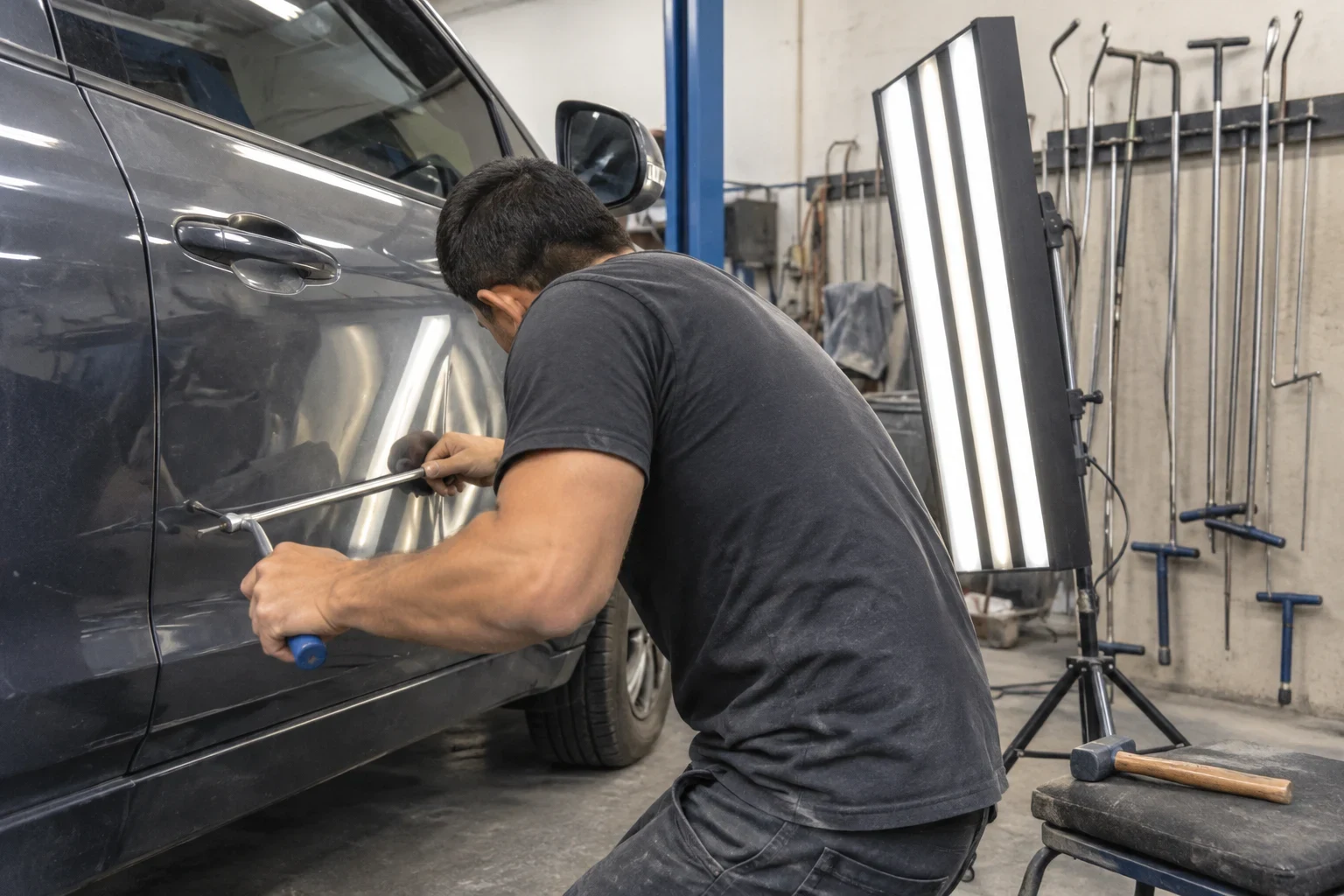
There are two ways to do the repair. Paintless dent repair uses steel rods and glue tabs to work the metal back into shape without sanding or painting. It works when the paint isn't cracked and the metal hasn't stretched too far. When it has, we pull the panel, fill it lightly, prime it and refinish it to match. We'll tell you which one your car needs and why.
Our shop is I-CAR Gold certified, which means our techs keep up with current repair methods for the steel and aluminum panels on newer vehicles.
What dent repair covers
- A look behind the panel
- We pull trim, tail lights or inner liners as needed to see the back of the dent. We check for bent brackets, damaged sensors and loose wiring before we start.
- Paintless dent repair
- For dings and soft dents with sound paint, we massage the metal back from behind using rods and light. No filler, no paint, and your original finish stays put.
- Conventional panel repair
- Sharp creases, stretched metal and dents with chipped paint get pulled, shaped and finished. After primer and paint, we carry the new color a little way onto the adjoining panel, so you don't see a line where the repair ends.
- Aluminum panels
- Aluminum doesn't move like steel. It hardens as you work it and can crack if pushed too hard. We use separate tools for it so steel particles don't contaminate the panel and start corrosion later.
- Function checks after
- We open and close doors, test windows and locks, and confirm any warning lights are off before your vehicle goes back to you.
Signs your dent needs more than a quick fix
Cracked or flaking paint
Once paint splits, moisture gets to bare metal. Rust can start under the paint before you see it.
A door that sticks or rattles
If the door is hard to close or a new noise shows up, the dent may have pushed into the hinge, latch or window track.
A warning light after the hit
A blind-spot or parking sensor light near the dent usually means a sensor got bumped or knocked out of aim. That needs checking, not ignoring.
A crease along a body line
Dents across a sharp body line or near a panel edge are harder to push out cleanly. They often need conventional repair.
Lots of small dents at once
Hail or debris can leave dozens of marks across the hood and roof. Many come out paintless, but it takes a careful count and plan.
What sets the price of dent repair
We price each dent after we've seen it up close. Two dents of the same size can land at very different numbers, because where a dent sits and what's behind it matter as much as how big it is. You get a written estimate before we touch your car, so you know what the work covers.
Paint condition
If the paint is unbroken, paintless repair is usually possible, and that keeps the cost down. Cracked or chipped paint means sanding, priming, painting and blending on top of the metal work.
Where the dent sits
A soft dent on the flat face of a door is quick work. A deep crease running along a body line, or a dent at the edge of a panel, takes a lot more time to bring back.
Getting to the back
Some dents can only be reached by removing a tail light, the headliner or a door trim panel. That removal and reinstall time is part of the price.
Panel material
Aluminum needs slower work and its own set of tools, so it costs more to repair than steel.
Sensors and parts nearby
When a sensor, bracket or trim clip got damaged in the hit, replacing or recalibrating it goes on the estimate as its own line.
From first call to pickup
- 1
Tell us what happened
When you phone, describe the panel that got hit, how it happened and whether any warning light came on after. We'll set a time for you to bring the car in.
- 2
Inspect and write the estimate
We look at the dent under shop lights, check behind the panel and take photos of what we find. You get a written estimate that names the repair method we plan to use.
- 3
Do the repair
A single ding fixed paintless is often done in the same visit. Panel repair with paint takes longer, because primer and paint need time to cure, and we don't rush that.
- 4
Check and hand back
We look the panel over from different angles, test the parts near the dent and walk around the car with you before you drive off.
Common questions about dents
Can my dent come out without painting?
Often, yes. If the paint isn't cracked and the metal hasn't stretched, paintless repair usually works. We'll know once we see it under the shop lights. If paint is needed, we'll tell you why before we start.
Will I be able to tell where the dent was?
With a paintless fix, your factory paint is never touched, so there's no new color to line up. If the spot needs paint, we fade the new color into the panel next to it instead of stopping at a hard edge. The paint and refinishing page explains how that blending works.
Is it worth going through insurance for a dent?
It comes down to the repair cost and your deductible. A small ding is often cheaper to pay for yourself. For hail or bigger damage, see our insurance claims page for how we deal with your insurer.
Is a small dent safe to leave alone?
A shallow ding with good paint usually isn't a safety issue. A dent with cracked paint, a sticking door or a warning light should be looked at soon. Rust and sensor problems get worse over time.
What if the dent turns out to be bigger damage?
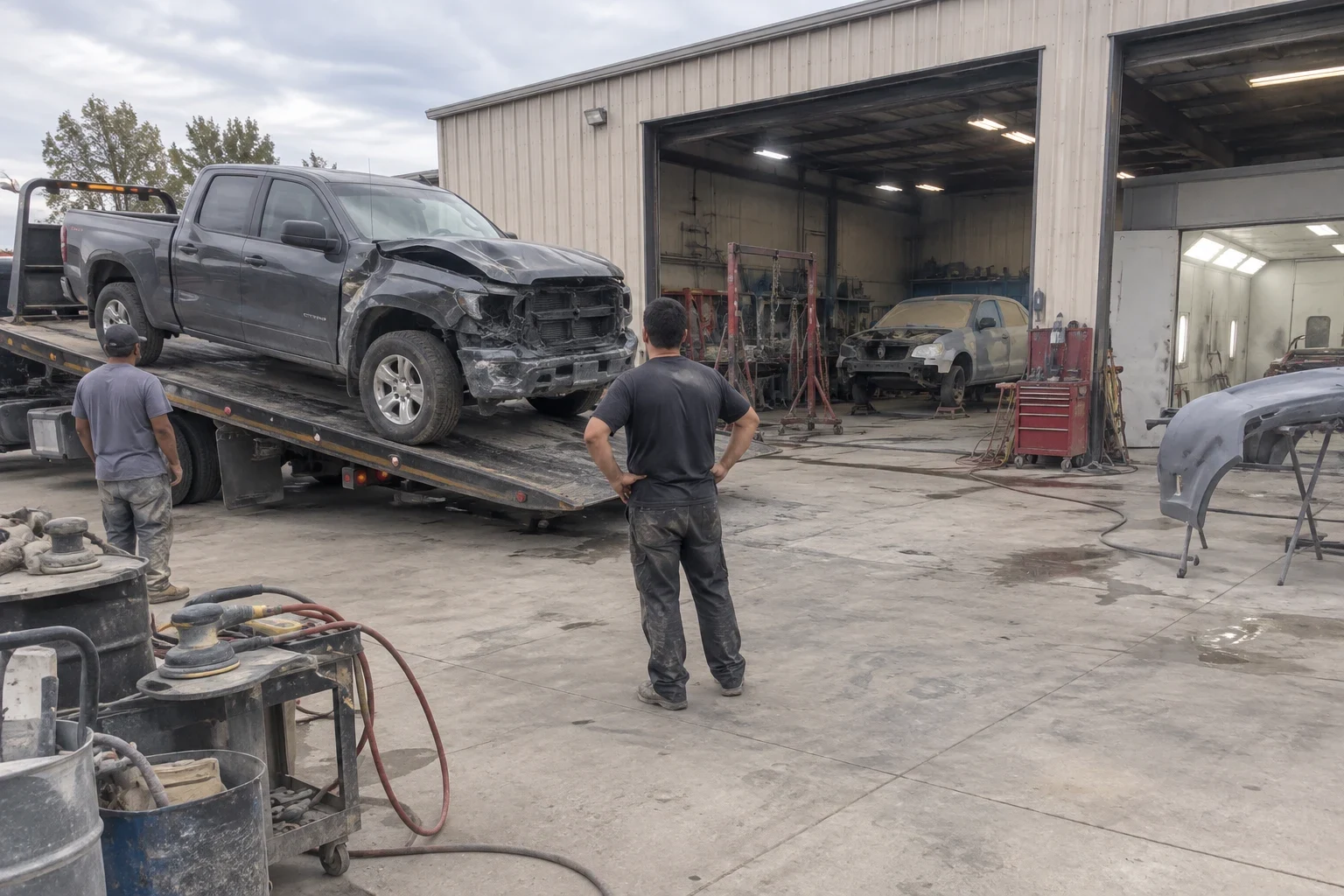
Sometimes a dent is just the part you can see of a harder hit. If we find bent supports or pushed-in structure, we'll show you the photos and talk about collision repair or frame straightening before doing anything.
Get that dent looked at
Bring your car in and we'll check the dent and what's behind it. You'll get a written estimate and a straight answer on the best way to fix it.